DTC Retention Marketing: 4 Strategies for 15% Higher Repeat Purchases

Implementing targeted DTC retention marketing strategies is crucial for direct-to-consumer brands aiming to significantly increase repeat purchases and customer lifetime value in a competitive market.
DTC Retention Marketing: Implementing 4 Key Strategies for 15% Higher Repeat Purchases in 2025
In the rapidly evolving landscape of direct-to-consumer (DTC) e-commerce, merely acquiring new customers is no longer sufficient for sustainable growth. The true differentiator lies in a brand’s ability to retain its existing customer base and foster repeat purchases. This is where DTC retention marketing strategies become paramount. By strategically focusing on customer loyalty and engagement, brands can unlock significant growth, aiming for an ambitious 15% higher repeat purchase rate by 2025. This article delves into four crucial strategies that DTC businesses can implement to achieve this goal, transforming one-time buyers into loyal advocates.
Understanding the Power of Customer Retention in DTC
Customer retention is the bedrock of long-term success for any DTC brand. In a market saturated with choices, consumers are constantly evaluating their options. A strong retention strategy not only reduces customer acquisition costs (CAC) but also significantly increases customer lifetime value (CLTV). When customers return, they often spend more, refer friends, and become invaluable brand ambassadors. Ignoring retention is akin to filling a leaky bucket; new customers come in, but just as many leave.
The economics of retention are compelling. Studies consistently show that increasing customer retention rates by just 5% can boost profits by 25% to 95%. For DTC brands, which often rely on direct relationships and personalized experiences, this translates into a powerful competitive advantage. By prioritizing retention, brands can build a stable revenue stream and foster a community around their products, making them less susceptible to market fluctuations and advertising cost increases.
Why Retention Outperforms Acquisition in the Long Run
While customer acquisition is vital for initial growth, its costs are continuously rising. Focusing solely on attracting new buyers can become an unsustainable model. Retention, on the other hand, leverages existing relationships, which are inherently more cost-effective and yield higher returns. Loyal customers are more forgiving, more likely to try new products, and less price-sensitive.
- Reduced Marketing Spend: It costs significantly less to retain an existing customer than to acquire a new one.
- Increased Customer Lifetime Value (CLTV): Loyal customers make more frequent and larger purchases over time.
- Enhanced Brand Advocacy: Satisfied customers become organic marketers, spreading positive word-of-mouth.
- Valuable Feedback Loop: Engaged customers provide insights that can drive product development and service improvements.
In conclusion, recognizing the intrinsic value of customer retention is the first step toward building a resilient and profitable DTC business. It shifts the focus from transactional interactions to long-term relationships, laying the groundwork for sustained growth and brand loyalty.
Strategy 1: Hyper-Personalization Across the Customer Journey
Hyper-personalization goes beyond simply addressing a customer by their first name; it involves tailoring every interaction, offer, and communication based on their unique preferences, past behaviors, and predicted future needs. For DTC brands, this means leveraging data to create highly relevant and engaging experiences that resonate deeply with individual customers, fostering a sense of being understood and valued.
Implementing hyper-personalization effectively requires a robust data infrastructure capable of collecting, analyzing, and acting upon customer insights. This includes purchase history, browsing behavior, demographic information, and even interactions with marketing campaigns. The goal is to move from broad segmentation to individual customer profiles, enabling truly one-to-one marketing.
Leveraging Data for Personalized Experiences
The foundation of hyper-personalization is data. DTC brands have a direct line to their customers, providing a wealth of first-party data that can be harnessed. This data allows for the creation of dynamic customer segments and predictive models.
- Behavioral Data: Track what products customers view, add to cart, or purchase to recommend similar items or remind them of abandoned carts.
- Purchase History: Analyze past purchases to offer complementary products, suggest replenishment, or alert them to new collections relevant to their tastes.
- Preference Centers: Allow customers to explicitly state their preferences, such as product categories, communication frequency, or desired content types.
- Demographic and Psychographic Data: Use this information to refine messaging, imagery, and product assortments that appeal to specific customer groups.
By consistently applying these data-driven insights, DTC brands can create a seamless and highly relevant customer journey, from initial website visit to post-purchase engagement. This level of personalization not only increases conversion rates but also significantly enhances customer satisfaction and loyalty, directly contributing to higher repeat purchases.
Strategy 2: Building Engaged Communities and Loyalty Programs
Beyond individual transactions, fostering a sense of community around a DTC brand can be a powerful retention tool. Customers who feel connected to a brand and its values are more likely to remain loyal. This strategy involves creating spaces and opportunities for customers to interact with the brand and with each other, transforming passive consumers into active participants. Alongside community building, well-structured loyalty programs provide tangible incentives for continued engagement.
Community building can take various forms, from dedicated online forums and social media groups to exclusive events and user-generated content campaigns. The key is to cultivate an environment where customers feel heard, valued, and part of something larger than themselves. This emotional connection often translates into stronger brand affinity and increased purchasing frequency.
Designing Effective Loyalty Programs
Loyalty programs are a direct mechanism to reward and incentivize repeat behavior. However, not all loyalty programs are created equal. The most effective ones offer clear value, are easy to understand, and provide a sense of progression and exclusivity.
- Tiered Rewards: Implement a multi-level system where customers unlock greater benefits as they spend more, fostering aspiration and continued engagement.
- Experiential Rewards: Offer exclusive access to new products, behind-the-scenes content, or special events, rather than just discounts.
- Points-Based Systems: Allow customers to earn points for purchases, referrals, social media shares, or even product reviews, which can then be redeemed for rewards.
- Subscription Models: For consumable products, a subscription service not only guarantees repeat purchases but also builds deep loyalty through convenience and perceived value.
By combining a vibrant community with a rewarding loyalty program, DTC brands can create a powerful ecosystem that encourages customers to stay, engage, and repeatedly purchase. This dual approach addresses both the emotional and transactional aspects of customer retention, leading to sustained growth.
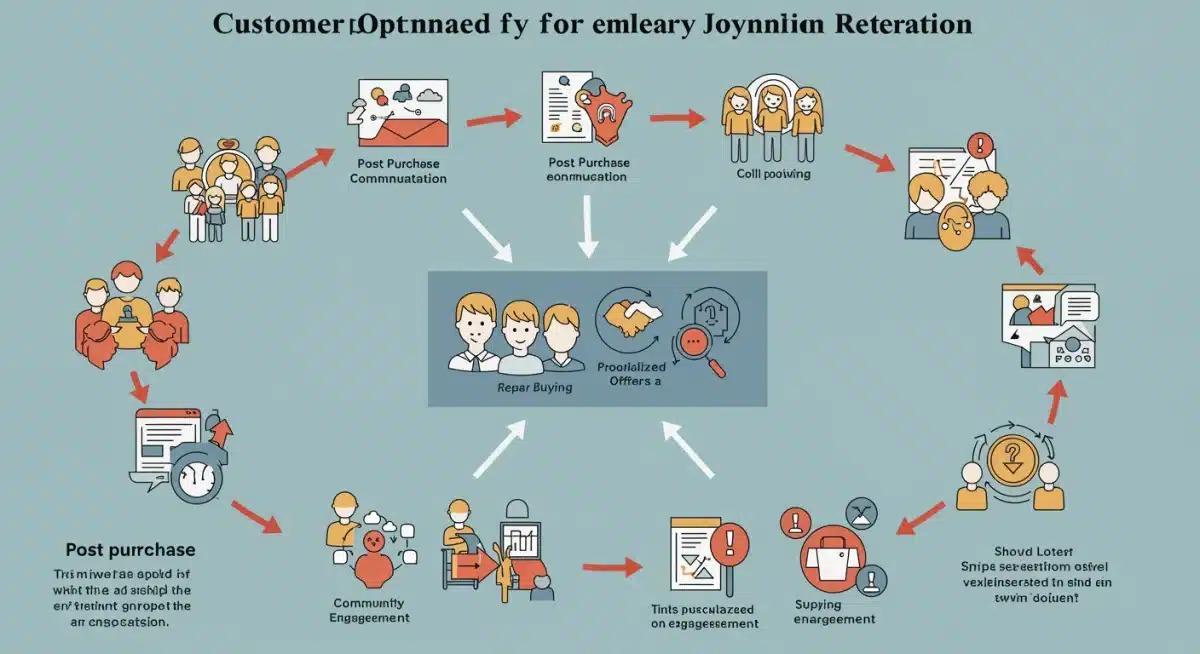
Strategy 3: Optimizing Post-Purchase Experience and Communication
The customer journey does not end at checkout; in fact, the post-purchase phase is a critical juncture for building lasting loyalty and driving repeat purchases. A seamless and delightful post-purchase experience can transform a one-time buyer into a brand advocate. This strategy focuses on proactive communication, efficient fulfillment, and exceptional customer support that reinforces the customer’s decision to purchase from your brand.
Many DTC brands invest heavily in acquisition but neglect the post-purchase phase, missing a golden opportunity to deepen customer relationships. From order confirmation to delivery and beyond, every touchpoint should be optimized to provide value, reassurance, and an enjoyable experience. This attention to detail signals to customers that they are valued beyond their transaction.
Key Elements of a Superior Post-Purchase Journey
A well-crafted post-purchase strategy involves several interconnected components, all aimed at fostering satisfaction and setting the stage for future purchases.
- Proactive Order Updates: Keep customers informed about their order status, shipping, and delivery, reducing anxiety and increasing trust.
- Personalized Follow-Ups: Send thank-you notes, product care tips, or suggestions for complementary items shortly after delivery.
- Hassle-Free Returns & Exchanges: A clear, easy-to-understand return policy and process build confidence and reduce friction for future purchases.
- Exceptional Customer Support: Provide multiple channels for support (email, chat, phone) and empower agents to resolve issues efficiently and empathetically.
By consistently delivering an outstanding post-purchase experience, DTC brands can significantly enhance customer satisfaction, reduce churn, and cultivate the trust necessary for driving higher repeat purchase rates. This phase is not an afterthought but a cornerstone of effective retention marketing.
Strategy 4: Leveraging Feedback and Continuous Improvement
For DTC brands aiming for 15% higher repeat purchases, simply implementing strategies is not enough; continuous monitoring, analysis, and adaptation are crucial. This final strategy emphasizes the importance of actively soliciting customer feedback, analyzing performance metrics, and using these insights to refine and improve all aspects of the customer experience. A brand that consistently listens to its customers and acts on their input demonstrates a commitment to excellence that fosters deep loyalty.
Feedback mechanisms should be integrated throughout the customer journey, providing opportunities for customers to share their thoughts at various touchpoints. This proactive approach not only helps identify pain points but also uncovers opportunities for innovation and differentiation. By closing the loop on feedback, brands show customers that their opinions matter, strengthening the relationship.
Tools and Metrics for Continuous Optimization
To effectively leverage feedback and drive continuous improvement, DTC brands need to utilize appropriate tools and focus on key performance indicators (KPIs).
- Customer Surveys: Implement post-purchase surveys, Net Promoter Score (NPS), and Customer Satisfaction (CSAT) surveys to gauge sentiment.
- Review Platforms: Encourage product reviews and testimonials, actively responding to both positive and negative feedback.
- Analytics Dashboards: Monitor key retention metrics such as repeat purchase rate, churn rate, CLTV, and time between purchases.
- A/B Testing: Continuously test different offers, messaging, and website experiences to optimize for engagement and conversions.
By establishing a robust system for collecting feedback and using data to inform decisions, DTC brands can ensure their retention strategies remain agile and effective. This iterative process of listening, learning, and improving is fundamental to achieving and sustaining higher repeat purchase rates in the long term.
Measuring Success: Key Metrics for 15% Higher Repeat Purchases
Achieving a 15% increase in repeat purchases by 2025 requires a clear understanding of what success looks like and how to measure it. Beyond the overall repeat purchase rate, DTC brands need to dive into several key metrics that provide a comprehensive view of their retention efforts. Monitoring these KPIs allows for timely adjustments to strategies and ensures resources are allocated effectively, driving continuous improvement and sustained growth.
The ability to accurately track and analyze these metrics is crucial for identifying trends, understanding customer behavior, and proving the ROI of retention initiatives. Without a data-driven approach, retention efforts can quickly become guesswork, leading to missed opportunities and inefficient spending. Therefore, establishing a robust analytics framework is as important as the strategies themselves.
Essential KPIs for Retention Marketing
Several metrics are particularly relevant for DTC brands focused on increasing repeat purchases. Each offers a unique perspective on customer loyalty and engagement.
- Repeat Purchase Rate (RPR): The percentage of customers who have made more than one purchase. This is the primary metric for tracking the goal.
- Customer Lifetime Value (CLTV): The total revenue a business can reasonably expect from a single customer account over their relationship with the brand.
- Churn Rate: The percentage of customers who stop purchasing from your brand over a given period. Lower churn directly correlates with higher retention.
- Purchase Frequency: The average number of times customers purchase within a specific timeframe. Increasing this metric is key to repeat purchases.
- Average Order Value (AOV) for Repeat Customers: Often, loyal customers tend to spend more per transaction. Tracking this helps understand the value of retained customers.
- Time Between Purchases: Analyzing the duration between a customer’s first and subsequent purchases helps in timing re-engagement campaigns.
By diligently tracking and analyzing these key performance indicators, DTC brands can gain actionable insights into the effectiveness of their retention marketing strategies. This data-driven approach empowers them to optimize their efforts, identify areas for improvement, and ultimately achieve their target of 15% higher repeat purchases by 2025.
| Key Strategy | Brief Description |
|---|---|
| Hyper-Personalization | Tailoring interactions and offers based on individual customer data and behavior. |
| Community & Loyalty | Building engaged customer communities and implementing rewarding loyalty programs. |
| Post-Purchase Optimization | Ensuring a delightful experience after checkout, including communication and support. |
| Feedback & Improvement | Actively collecting customer feedback and using data for continuous strategy refinement. |
Frequently Asked Questions About DTC Retention
DTC retention marketing focuses on strategies designed to keep existing direct-to-consumer customers engaged and encourage them to make repeat purchases. It emphasizes building long-term relationships and increasing customer lifetime value rather than solely acquiring new buyers.
Customer retention is crucial for DTC brands because it reduces customer acquisition costs, increases customer lifetime value, fosters brand loyalty, and generates valuable word-of-mouth referrals. Loyal customers also tend to spend more and are less sensitive to pricing changes.
Personalization improves repeat purchases by making customers feel understood and valued. Tailoring product recommendations, communications, and offers based on their past behavior and preferences creates a more relevant and engaging shopping experience, encouraging them to return.
Loyalty programs play a significant role by directly incentivizing repeat purchases and continued engagement. They reward customers for their loyalty through points, tiered benefits, or exclusive access, fostering a sense of appreciation and encouraging them to stick with the brand.
DTC brands should collect customer feedback continuously and at various stages of the customer journey, not just once. Post-purchase surveys, in-app feedback, and regular NPS checks provide ongoing insights to identify pain points and opportunities for improvement in real-time.
Conclusion
Achieving an ambitious goal of 15% higher repeat purchases by 2025 for DTC brands is not just a pipe dream; it’s an attainable reality through the strategic implementation of robust retention marketing. By prioritizing hyper-personalization, fostering vibrant customer communities, optimizing the post-purchase experience, and committing to continuous improvement based on feedback, DTC brands can transform their customer relationships. This shift from transactional interactions to long-term loyalty is not only financially rewarding but also builds a more resilient and beloved brand, ensuring sustainable growth in an increasingly competitive e-commerce landscape. The future of DTC success lies in valuing and nurturing every single customer.