Omnichannel Trends Reshaping US E-commerce by 2025
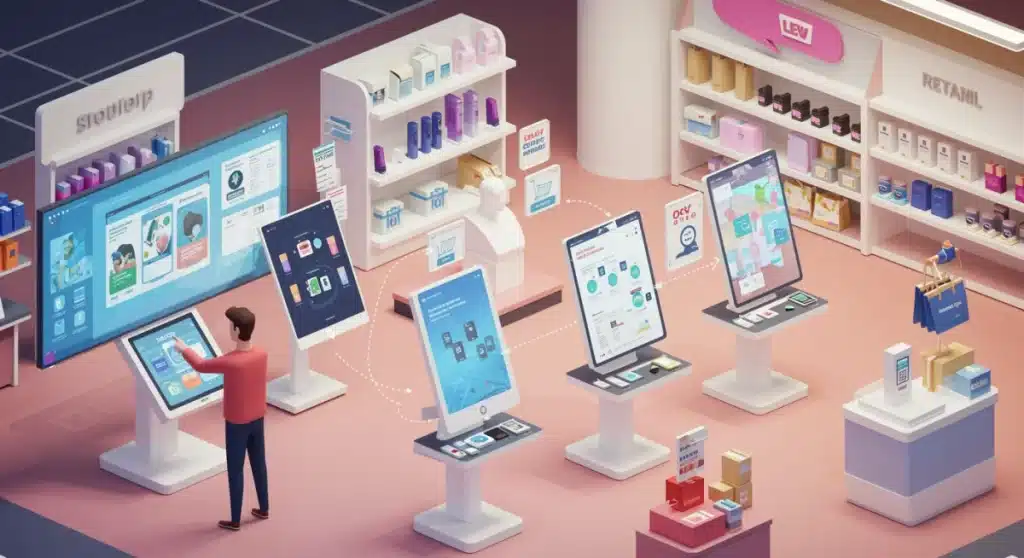
The Blurring Lines of Retail: How Omnichannel Trends Are Evolving in US E-commerce for 2025 focuses on the seamless integration of digital and physical retail channels, creating unified customer journeys and enhancing brand loyalty across various touchpoints in the American market.
The retail landscape is undergoing a dramatic transformation, with the traditional boundaries between online and offline shopping rapidly dissolving. By 2025, the evolution of omnichannel trends in US e-commerce will not just be a competitive advantage, but a fundamental expectation for consumers. This shift demands a strategic re-evaluation from retailers, pushing them to create cohesive, personalized experiences that span every customer touchpoint, from browsing on a mobile device to in-store pickups and beyond.
The rise of integrated customer journeys
The modern consumer no longer thinks in terms of separate channels. They expect a fluid, consistent experience, whether they are engaging with a brand online, via social media, or in a physical store. This expectation is driving retailers to invest heavily in integrated customer journeys, ensuring that every interaction builds upon the last, creating a holistic brand perception.
This integration goes beyond merely having an online store and a physical presence. It involves a deep understanding of customer behavior across all channels and leveraging data to personalize experiences. The goal is to make the customer feel understood and valued, regardless of how they choose to interact with the brand.
Personalization at scale
Personalization is no longer a luxury; it’s a necessity. Retailers are using advanced analytics and AI to deliver tailored product recommendations, marketing messages, and even in-store experiences. This level of personalization helps foster stronger customer relationships and drives conversion rates.
- AI-driven product recommendations based on past purchases and browsing history.
- Personalized email marketing campaigns segmenting customers by preferences.
- Dynamic website content that adapts to individual user behavior.
- In-store assistance enhanced by customer data for a more personalized service.
The continuous structure approach highlights how data collected from various touchpoints feeds into a single customer profile, allowing for a truly personalized journey. This data-driven approach enables retailers to anticipate customer needs and offer relevant solutions proactively, rather than reactively.
In conclusion, integrated customer journeys are the bedrock of evolving omnichannel strategies. By focusing on seamless transitions and deep personalization, retailers can meet the demands of the modern consumer and build lasting loyalty in a competitive market.
Technology as the omnichannel enabler
Technology is the engine driving the omnichannel revolution. From cloud-based platforms to artificial intelligence and augmented reality, innovations are empowering retailers to connect disparate channels and deliver unified experiences. Without robust technological infrastructure, achieving true omnichannel integration would be impossible.
Investing in the right technology is crucial for retailers aiming to stay competitive. This includes platforms that can manage inventory across all channels, CRM systems that provide a single view of the customer, and tools that enable seamless communication between online and offline operations.
Key technological innovations
Several technological advancements are proving pivotal in the development of omnichannel strategies. These innovations are not just about efficiency; they are about enhancing the customer experience and creating new opportunities for engagement.
- Unified commerce platforms: Systems that integrate POS, e-commerce, inventory, and customer data into one centralized platform.
- Artificial intelligence (AI) and machine learning (ML): Used for predictive analytics, personalized recommendations, and automated customer service.
- Augmented reality (AR) and virtual reality (VR): Enhancing product visualization and immersive shopping experiences both online and in-store.
- Internet of Things (IoT): Smart devices in stores and homes providing data for better insights and personalized interactions.
The continuous structure emphasizes that these technologies work in concert. For instance, AI can analyze data from IoT devices to inform personalized AR experiences. This interconnectedness is what makes omnichannel truly powerful, allowing for dynamic adaptation and continuous improvement of the customer journey.
Ultimately, technology serves as the backbone for creating and sustaining omnichannel strategies. Retailers who embrace and strategically implement these tools will be better positioned to thrive in the complex retail environment of 2025.
The evolving role of physical stores
Despite the growth of e-commerce, physical stores are far from obsolete. Their role, however, is significantly evolving. Instead of being solely transactional hubs, stores are transforming into experience centers, showrooms, and critical components of the omnichannel fulfillment network. They are becoming places where brands can truly connect with customers on a deeper level.
This transformation requires a re-imagining of store design, staff training, and operational processes. Stores are now expected to offer services like buy online, pick up in-store (BOPIS), ship from store, and even host events that foster community and brand loyalty. The physical space is becoming an extension of the digital experience.
Stores as experience hubs
Modern physical stores are designed to offer more than just products. They provide immersive experiences, expert advice, and a tangible connection to the brand. This experiential aspect helps differentiate brick-and-mortar from purely online shopping.
- Interactive displays and product demonstrations.
- Workshops, classes, and community events.
- Personal shopping services and styling consultations.
- Cafés or lounge areas for a relaxed shopping environment.
The continuous structure highlights how these experiential elements are directly linked to the brand’s online presence. Customers might discover an event online and attend in-store, or try a product in-store and purchase it later online. This seamless flow reinforces the omnichannel approach.
In conclusion, physical stores are undergoing a renaissance, shifting from transactional points to vital experience and fulfillment centers. Their integration into the broader omnichannel strategy is crucial for creating a comprehensive and engaging customer journey.
Data-driven decision making and analytics
At the heart of successful omnichannel operations lies robust data collection and sophisticated analytics. Retailers are leveraging vast amounts of data from every customer touchpoint to gain actionable insights, optimize strategies, and personalize experiences at an unprecedented level. This data-driven approach is critical for understanding customer behavior and predicting future trends.
From website clicks and social media engagement to in-store purchases and customer service interactions, every piece of data contributes to a holistic view of the customer. Analyzing this data allows retailers to identify patterns, measure the effectiveness of marketing campaigns, and refine their product offerings.
Unlocking customer insights
Advanced analytics tools are enabling retailers to move beyond basic sales figures and delve into the nuances of customer behavior. This deeper understanding informs strategic decisions across the entire business, from marketing to inventory management.
- Customer lifetime value (CLV) analysis: Identifying and nurturing high-value customers.
- Attribution modeling: Understanding which channels contribute most to conversions.
- Sentiment analysis: Gauging customer feelings from reviews and social media.
- Personalized marketing ROI: Measuring the effectiveness of targeted campaigns.
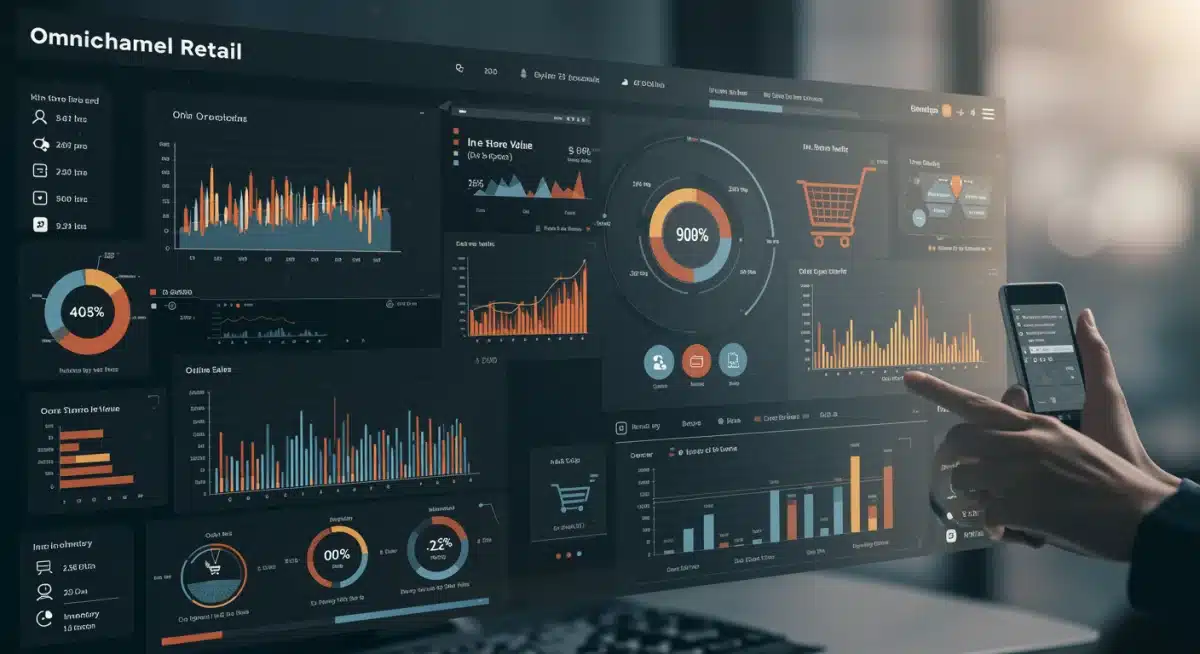
The continuous structure emphasizes how real-time data feeds into dashboards, allowing for immediate adjustments to strategies. This agility is vital in the fast-paced e-commerce landscape, where consumer preferences can shift rapidly. Data helps retailers stay ahead of the curve.
Ultimately, data-driven decision making is non-negotiable for retailers navigating the complex omnichannel world. By harnessing the power of analytics, businesses can optimize their operations, enhance customer satisfaction, and drive sustainable growth.
Supply chain and fulfillment innovation
The promise of a seamless omnichannel experience hinges significantly on an agile and efficient supply chain and fulfillment operation. Consumers expect fast, flexible, and convenient delivery options, whether it’s same-day delivery, in-store pickup, or ship-to-home. Meeting these expectations requires significant innovation in logistics and inventory management.
Retailers are adopting advanced technologies and strategies to optimize their supply chains, ensuring products are available where and when customers want them. This includes leveraging distributed inventory models, automation in warehouses, and sophisticated last-mile delivery solutions.
Meeting customer delivery expectations
The modern consumer’s expectations for fulfillment are higher than ever. Convenience and speed are paramount, pushing retailers to innovate their delivery and pickup options.
- BOPIS (Buy Online, Pick Up In-Store): A popular option offering convenience and speed.
- Curbside pickup: An extension of BOPIS, providing added safety and ease.
- Ship from store: Utilizing physical store inventory to fulfill online orders, reducing shipping times and costs.
- Micro-fulfillment centers: Smaller, automated warehouses strategically located closer to urban centers for faster delivery.
The continuous structure highlights how these fulfillment innovations are directly integrated with the customer’s online shopping experience. Real-time inventory visibility across all channels ensures that customers can see accurate stock levels and choose the most convenient fulfillment option at checkout. This transparency builds trust and enhances satisfaction.
In conclusion, superior supply chain and fulfillment capabilities are essential for delivering on the omnichannel promise. Retailers must continue to innovate in this area to meet evolving customer demands and maintain a competitive edge.
The future of customer engagement and loyalty
As omnichannel trends mature, the focus increasingly shifts towards fostering deeper customer engagement and cultivating lasting loyalty. Beyond transactional interactions, retailers are striving to build communities, offer exclusive benefits, and create emotional connections with their audience. This holistic approach ensures customers not only return but also become brand advocates.
Loyalty programs are evolving beyond simple points systems, incorporating personalized rewards, early access to products, and unique experiences. The aim is to make customers feel like part of an exclusive club, strengthening their bond with the brand.
Building brand advocacy
Engaging customers effectively means transforming them from mere buyers into enthusiastic brand advocates. This involves creating experiences that resonate and providing platforms for customers to share their positive interactions.
- Community building: Online forums, social media groups, and in-store events that foster interaction among customers and with the brand.
- Personalized loyalty programs: Tailored rewards, exclusive content, and early access based on individual preferences and purchase history.
- Exceptional customer service: Seamless support across all channels, resolving issues quickly and efficiently.
- User-generated content (UGC): Encouraging customers to share their experiences and products, amplifying brand reach.
The continuous narrative emphasizes how continuous feedback loops from customer engagement strengthen loyalty programs. By listening to customer input across all channels, retailers can refine their offerings and engagement strategies, ensuring they remain relevant and appealing. This iterative process is key to long-term success.
Ultimately, the future of retail lies in fostering profound customer engagement and loyalty. By focusing on personalized experiences, community building, and exceptional service, brands can create a resilient customer base that drives sustained growth in the evolving omnichannel landscape.
| Key Omnichannel Trend | Brief Description |
|---|---|
| Integrated Customer Journeys | Seamless, consistent experiences across all online and offline brand touchpoints, driven by personalization. |
| Technology as Enabler | Utilizing AI, AR, VR, and unified platforms to connect channels and enhance customer interactions. |
| Evolving Physical Stores | Stores transform into experience centers and fulfillment hubs, offering BOPIS and immersive engagements. |
| Data-Driven Decisions | Leveraging analytics from all touchpoints to gain insights, optimize strategies, and personalize experiences. |
Frequently asked questions about omnichannel retail
Omnichannel retail in 2025 US e-commerce refers to a fully integrated approach where all sales and communication channels work together seamlessly. This creates a unified and consistent customer experience, blurring the lines between online and physical shopping, and enhancing convenience and personalization across every interaction.
Physical stores are transforming from mere sales points into vital experience centers, showrooms, and fulfillment hubs. They support services like Buy Online, Pick Up In-Store (BOPIS) and ship-from-store, offering immersive brand experiences and fostering community, thereby becoming integral to the overall customer journey.
Key technologies include unified commerce platforms that integrate POS, e-commerce, and inventory. Artificial intelligence and machine learning drive personalization and predictive analytics. Augmented and virtual reality enhance product visualization, while IoT devices provide valuable behavioral data, all working in synergy for a cohesive experience.
Data analytics is fundamental, as it provides insights into customer behavior across all touchpoints. This enables retailers to personalize recommendations, optimize marketing campaigns, refine product assortments, and enhance overall customer satisfaction by making informed, proactive decisions based on a comprehensive understanding of individual preferences.
A robust omnichannel strategy leads to increased customer loyalty, higher conversion rates, and improved customer lifetime value. It enhances brand perception, provides competitive differentiation, and optimizes operational efficiency through integrated inventory and fulfillment. Ultimately, it drives sustainable growth and profitability in a dynamic market.
Conclusion
The trajectory of retail in the US is undeniably omnichannel, with 2025 marking a significant evolution in how brands interact with consumers. The blending of digital and physical realms is no longer an aspiration but a fundamental operational standard. Success hinges on a relentless focus on the customer, powered by technological innovation, data-driven insights, and a re-imagined role for physical stores. Retailers who embrace these evolving trends will not only meet but exceed consumer expectations, forging stronger relationships and securing their position in a fiercely competitive market. The future of US e-commerce is bright for those who master the art of seamless, integrated retail.